21st-century tourism is undergoing a profound transformation. More than simply moving from one place to another, the modern traveller seeks meaning and experiences that connect them to the land, to people, and to universal values. Thus, the concept of tourism with purpose emerges: a model that combines pleasure, responsibility, and a positive impact on the world.
For decades, tourism was seen as an economic driver, but rarely as an instrument of social awareness. Today, the sector is called upon to assume a more humane and ethical role, capable of balancing growth and sustainability. For this reason, we use the term “from people to people”. The Tourism 2027 Strategy, from Turismo de Portugal, precisely reflects this vision: to promote inclusive, innovative, and environmentally responsible tourism.
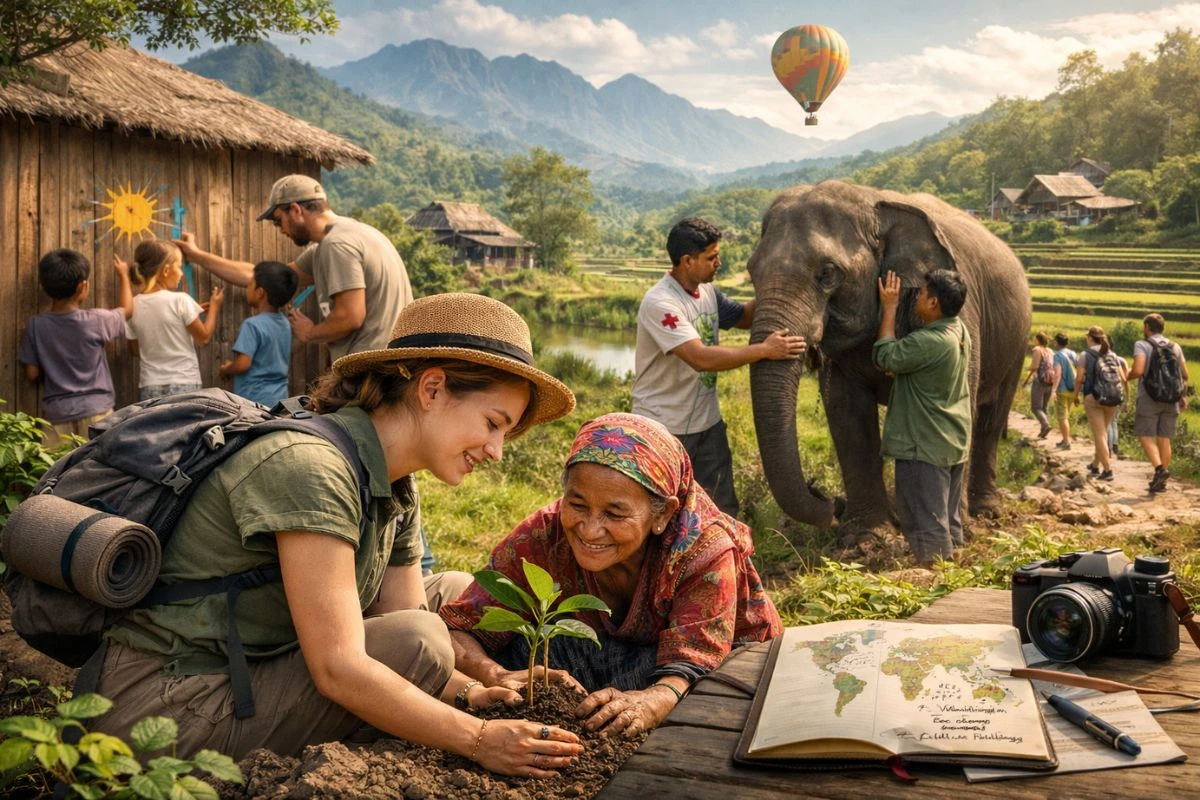
Travelling with purpose means understanding that every choice — the destination, transport, accommodation, or meal — has consequences. The conscious tourist seeks experiences that benefit local communities, respect culture, and preserve natural heritage. In this sense, tourism becomes a tool for education, empathy, and social transformation.
The concept of inclusive tourism broadens this perspective. Inclusion is more than ensuring physical access; it is about valuing human diversity in all its dimensions. A truly welcoming destination is one that integrates people with different abilities, backgrounds, and stories. Portugal has made progress with projects such as Accessible Tourism, but the greatest challenge remains raising awareness and changing mindsets.
Hospitality thus gains a new meaning: to welcome is not merely to receive, but to understand. When tourism is practised with empathy, it forges lasting bonds between visitors and communities, creating a relationship of reciprocity and respect. Purpose becomes the link between personal experience and collective impact.
This new paradigm also requires conscious professionals, trained to serve with both skill and sensitivity. Schools such as EHTP play a decisive role in preparing future leaders in the sector, capable of uniting knowledge, ethics, and a human vision. Tourism is not merely an economic activity: it is a space for encounter, learning, regeneration, and, of course, social leverage.
More recently, the debate on regenerative tourism has broadened this horizon even further. The aim is no longer merely to minimise harm, but to create a positive impact, revitalising ecosystems and communities. This is an evolved vision of sustainable tourism, inviting everyone — companies, institutions, and travellers — to act with awareness and commitment.
The future of tourism will inevitably be a future with purpose. Travelling will cease to be merely an act of leisure and will become an act of citizenship. Each journey, when guided by empathy and responsibility, will also be a contribution to a more inclusive, sustainable, and humane world.
Author:
Ariel Mayeto Canga Garcia
Alumni of the Tourism Management Course